
Winter Joint Pain in Delhi NCR: Why Knees and Hips Ache More in Cold Weather
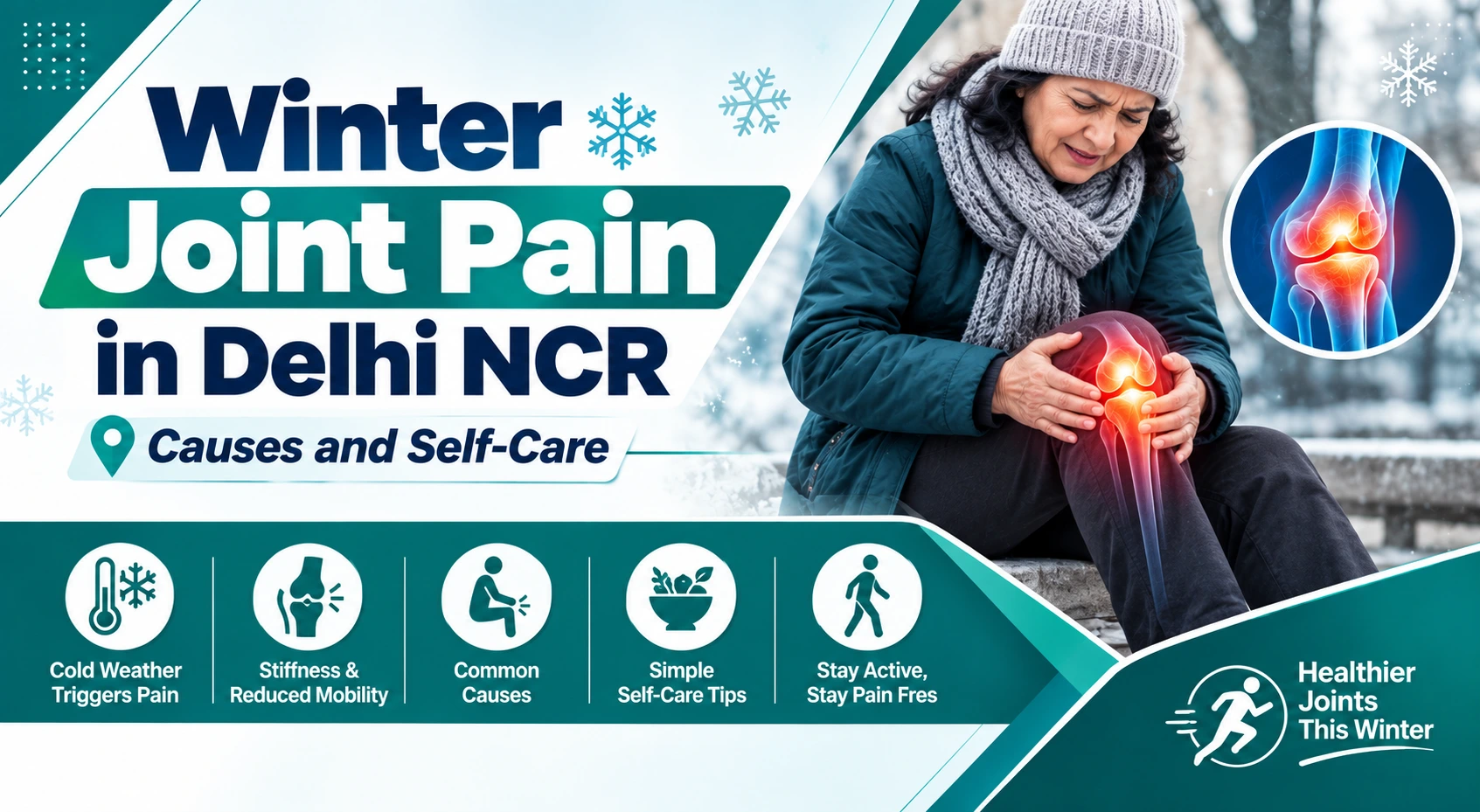
By Dr. Anuj Jain, M.B.B.S., M.S. (Orth), D.N.B., MNAMS Published and last updated: 7th October 2026.
Many people in Delhi NCR notice that winter joint pain begins as temperatures drop in November. Knees, hips and shoulders feel stiffer in the morning, and existing knee pain often seems sharper on cold days. It helps to separate what is well understood from what is still uncertain.
Does cold weather really worsen joint pain?
Many patients report more pain and stiffness in cold weather, but research on weather and joint symptoms has been mixed, and a direct cause has not been firmly established. Several factors probably contribute to winter joint pain:
- Less activity. People walk and exercise less in winter, and joints that move less develop more joint stiffness.
- Muscle tightness. Cold can make muscles and soft tissues feel tighter, which adds to joint stiffness around the knees and hips.
- Lower vitamin D. Less sun exposure and heavier clothing can lower vitamin D levels, which matters for bone and muscle health.
- Pain perception. Cold and changes in air pressure may make existing arthritis or knee pain feel stronger.
Winter does not cause arthritis. It can make an existing joint condition more noticeable.
Who is more likely to notice it?
- People with osteoarthritis of the knee or hip
- Those with old fractures or previous joint injuries
- People with inflammatory conditions such as rheumatoid arthritis
- Older adults, and people with low vitamin D or reduced bone density
If your discomfort has been present for months, the weather may not be the only explanation. This overview of the common causes of knee pain explains the range of possibilities and when to seek advice.
Simple steps that may ease winter joint pain
- Keep moving. Gentle walking, stretching and low-impact exercise help maintain flexibility. Indoor options such as stationary cycling work on cold or polluted days. See these joint-friendly exercises after 50 for low-impact ideas.
- Warm up first. Spend 5 to 10 minutes on gentle movement before exercise or a morning walk to reduce joint stiffness.
- Dress in layers. Keep the knees, hips and shoulders covered and warm.
- Use warmth for stiffness. A warm compress or warm bath can ease muscle tightness. Avoid applying heat to a joint that is red, hot or newly swollen.
- Check your vitamin D. Ask your doctor whether a blood test is appropriate. Do not start high-dose supplements without advice.
- Maintain a healthy weight. Every extra kilogram adds load on the knees and hips and can worsen knee pain.
- Avoid long-term self-medication. Repeated use of painkillers without advice can affect the stomach, kidneys and blood pressure. Safe joint pain management starts with a proper diagnosis.
Warning signs: when to see a doctor
Please consult a registered orthopaedic specialist if you have:
- Joint pain lasting more than a week
- Pain at night or at rest
- Morning joint stiffness lasting more than 30 minutes
- Swelling, redness or warmth in a joint
- Fever together with joint pain
- Difficulty walking, climbing stairs or bearing weight
- Pain after a fall or injury
These symptoms need a proper examination, and sometimes X-rays or blood tests, to find the cause. Persistent knee pain or suspected arthritis needs a diagnosis rather than guesswork, and winter is not always the explanation.
Key takeaways
- Cold weather can make winter joint pain feel worse, but it does not cause arthritis.
- Staying active, keeping warm and checking vitamin D are sensible first steps against joint stiffness.
- Severe, persistent or night-time knee pain should be evaluated by a doctor.
Disclaimer: This article is for general health education only. It is not a substitute for personal medical advice, diagnosis or treatment. Please consult a registered medical practitioner about your specific condition.

Useful Links
Our Services
Dr. Anuj Jain
 "Being an Orthopaedic Surgeons my aim is restoring mobility and keeping our nation in motion."
Dr. Anuj Jain
M.B.B.S., M.S. (Orth), D.N.B. Gold Medalist

