

Sports Injuries from Overtraining: Signs, Prevention & Expert Care
You’ve been hitting the gym hard, or maybe you’re training for that upcoming marathon in Noida. You feel great, the progress is visible, and you decide to push just a little further. But then, a nagging ache in your knee or a sharp pull in your hamstring starts to slow you down. You try to "push through the pain," but it only gets worse. This is a scenario I see every day in my clinic. Many athletes believe that "more is always better," but in reality, your body needs rest just as much as it needs reps. When the balance tips, you end up in my office with an overtraining injury.
What is a Sport Injury?
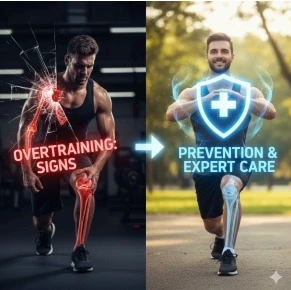
In the simplest terms, a sport injury is any type of damage to the body that occurs during exercise, athletic activities, or sports. While some injuries happen in a split second—like a fall or a collision—overtraining injuries are "overuse" injuries. They develop slowly over time because the body isn't given enough time to repair the microscopic tears that happen during a workout.
Meaning of Sports Injuries
If we look at the meaning of sports injuries from a clinical perspective, we are talking about musculoskeletal damage. This includes trauma to the muscles, bones, ligaments (which connect bones), and tendons (which connect muscle to bone). When we talk about overtraining, the "injury" is often the body’s way of sounding an alarm that its structural integrity is being compromised.
Common Sports Injuries Caused by Overtraining
When you don’t allow for recovery, specific parts of your body begin to wear down. Some of the most common sports injuries I treat include:
- Stress Fractures: These are tiny cracks in the bone, often in the feet or lower legs, caused by repetitive force.
- Achilles Tendonitis: Inflammation of the tendon that connects your calf muscle to your heel.
- Patellofemoral Syndrome: Also known as "Runner’s Knee," where the cartilage under the kneecap becomes irritated.
- Tennis or Golfer’s Elbow: Inflammation of the tendons in the forearm due to repetitive gripping or swinging.
- Rotator Cuff Tendonitis: Common in swimmers or gym-goers who perform too many overhead presses without proper form or rest.
Doctor’s Note: If you’re feeling persistent pain that doesn't go away after two days of rest, it’s time to stop searching for "home remedies" and look for a sports injury doctor near me to prevent a minor strain from becoming a major tear.
What are the Causes of Sports Injuries?
Understanding what are the causes of sports injuries is the first step toward staying on the field. While accidents happen, overtraining injuries usually stem from three specific errors:
- The "Too Much, Too Soon" Rule: Increasing your mileage, weight, or intensity by more than 10% a week is a recipe for disaster.
- Poor Technique: When you’re tired from overtraining, your form slips. This puts stress on joints that aren't meant to handle the load.
- Muscle Imbalances: If you only train your "mirror muscles" (chest and quads) and neglect your back and hamstrings, your body pulls unevenly on your joints.
Early Warning Signs You Should Not Ignore
Your body is remarkably good at communicating; you just have to listen. Watch out for these red flags:
- Morning Stiffness: Feeling like a "tin man" when you wake up is a sign of chronic inflammation.
- Pain that Lingers: Pain that persists even after you’ve warmed up or stays with you at rest.
- Decreased Performance: If your "easy" runs feel hard and your strength is plateauing, you aren't getting weaker—you’re overtrained.
- Disturbed Sleep: High cortisol levels from overtraining can actually make it harder to sleep, which further halts recovery.
If these signs sound familiar, it might be time to consult a sports injury doctor in Noida. Early intervention is the difference between a one-week break and a six-month recovery process.
Sports Injury Prevention Tips
The goal isn't just to fix the injury; it’s to make sure it never happens again. Here is how you can master sports injury prevention:
- The 48-Hour Rule: Avoid working the same muscle group intensely two days in a row.
- Prioritize Sleep: This is when your body releases growth hormones to repair tissue.
- Fuel Your Recovery: Ensure you’re eating enough protein and staying hydrated to keep your tissues resilient.
- Vary Your Routine: Cross-training (like swimming for runners) reduces repetitive stress on specific joints.
How to Prevent Knee Injuries in Sports
The knee is the most common joint I see in my surgical practice. Learning how to prevent knee injuries in sports is vital for career longevity.
- Strengthen the Glutes: Your hips control the alignment of your knees. Weak hips lead to "caving" knees, which causes ACL and meniscus issues.
- Check Your Footwear: Worn-out shoes lose their shock absorption, sending that force directly into your knee joint.
- Warm-up Dynamically: Never stretch a cold muscle. Use movements like lunges and leg swings to "wake up" the joint lubricant (synovial fluid).
When to Consult a Sports Injury Doctor Near You
I always tell my patients: "Pain is a signal, not a challenge." If you have localized swelling, pain that causes you to limp, or a joint that feels "unstable," you need a professional evaluation. Seeking out the sports injury doctor in Noida. doesn't always mean you are headed for surgery. In fact, an experienced surgeon is often the best person to help you avoid surgery through advanced physiotherapy, bracing, or regenerative injections.
Why Choose an Experienced Sports Injury Doctor in Noida?
With over 15 years of experience treating everyone from weekend warriors to professional athletes, I understand that your goal is to get back to the activity you love as quickly as possible. Our clinic focuses on a personalized treatment approach. We don't just look at the X-ray; we look at your movement patterns. By identifying the root cause of your overtraining injury, we provide an early diagnosis that prevents surgery down the road. Whether it’s a stubborn ligament issue or a chronic tendon problem, we use the latest diagnostic tools to get you back on track.
Take the First Step Toward Recovery
Don’t let a small ache turn into a permanent problem. If you are looking for a trusted sports injury doctor in Noida, our team is here to help. [Book Your Consultation Today – Early Diagnosis is the Key to Peak Performance]
Frequently Asked Questions (FAQs)
1. What do you mean by sports injuries exactly?
It refers to any injury sustained during exercise or sports. These can be acute (sudden, like a broken bone) or chronic (developing over time, like tendonitis).
2. Can I treat an overtraining injury with just rest?
Rest is essential, but it’s only half the battle. You also need to address the muscle imbalances or form issues that caused the injury, or it will simply return when you start training again.
3. How do I know if I need a sports injury surgeon or just a physio?
A sports injury doctor can provide a definitive diagnosis via MRI or ultrasound. If the injury is a complete tear or a severe fracture, a surgeon’s expertise is needed. For most overuse injuries, a combination of expert medical guidance and rehabilitation is the gold standard.
4. Is it possible to prevent all sports injuries?
While you can’t prevent every accident, research shows that proper sports injury prevention protocols—such as strength training and scheduled rest—can reduce the risk of overuse injuries by over 50%.
Why Choose Dr. Anuj Jain
With 15+ years of experience, Dr. Anuj Jain has helped thousands of patients across India regain mobility and lead pain-free lives. His clinic in Noida (LGF, B-2, Sector 50, Noida, Uttar Pradesh 201301) offers state-of-the-art facilities and personalized care.
Achievements & Awards:
- Indian Ambassador to Singapore (2018)
- Robert Rofl Clinical Fellow (2016)
- Balu Shankaran National Gold Medal in Orthopaedics DNB Examination (2012)
- All India Rank 1 – UPSC & Postgraduate Entrance Exam (2008)
When it comes to your health, don’t wait for the pain to settle—get the right diagnosis and personalized treatment today.


